

.jpg)
Market Insights
2026-09-25
Converting Commercial Premises into a Home in Madrid
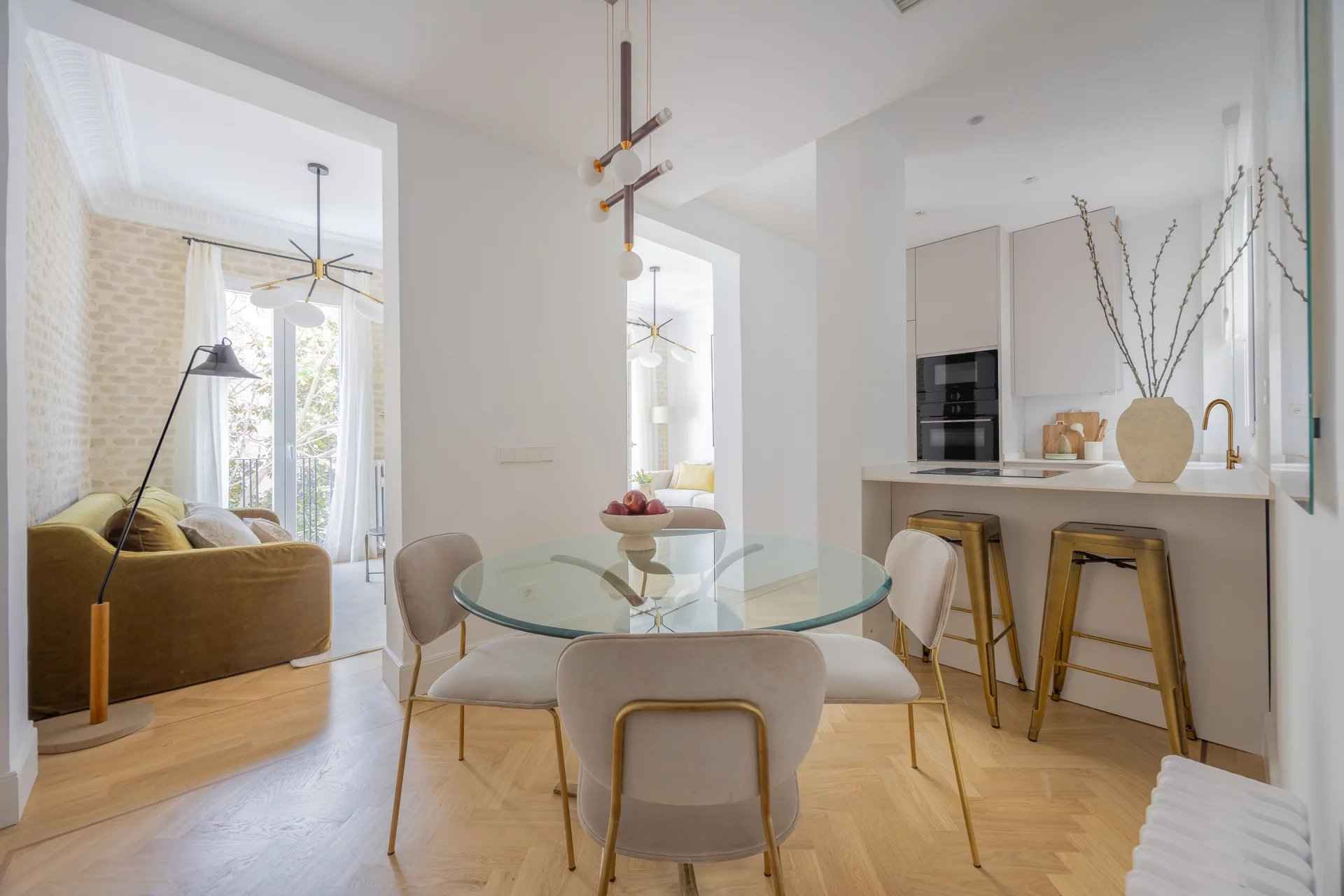
Changing the use of commercial premises to residential in Madrid: regulations, requirements and steps
The change of use from commercial premises to residential property has become an increasingly common consideration in the Spanish real estate market. In cities such as Madrid, where residential demand is high and commercial premises may have a lower price per square metre than homes, many buyers consider acquiring a commercial unit and transforming it into a habitable space.
However, not every commercial unit can be converted into a home. Before purchasing, renovating or applying for financing, it is essential to review the regulations governing the change of use from commercial premises to residential property, the planning status of the property, the building’s technical conditions and the true feasibility of the project.
In Madrid, this process requires particularly careful due diligence. Municipal planning regulations, the Spanish Technical Building Code, the relevant permit, the owners’ association, accessibility, ventilation, natural light and the final registration with the Land Registry and Cadastre are all key elements.
What does changing commercial premises into a home involve?
Changing commercial premises into residential property means modifying the planning and registered use of the property. In other words, a space originally authorized for commercial activity, office use, storage or another non-residential purpose becomes designated for residential use.
This change does not depend simply on carrying out an attractive renovation. An open-plan kitchen, a well-designed bedroom or a modern layout do not automatically turn commercial premises into a legal home.
For the property to be legally recognized as residential, it must comply with the applicable regulations and obtain the necessary authorizations.
In practical terms, the process generally involves three levels:
First, planning feasibility: checking whether residential use is permitted for the premises.
Second, technical feasibility: confirming that the property can meet habitability, safety, ventilation, lighting, accessibility, health, acoustic insulation and energy-efficiency requirements.
Third, legal regularization: obtaining the relevant permits, carrying out the works, obtaining the final documentation and registering the new use with the Land Registry and Cadastre.
Why can this type of transaction be attractive?
The main attraction is usually financial. In many areas, the price per square metre of commercial premises can be lower than that of residential property.
This may create an opportunity for buyers who want to live in an established neighborhood or for investors seeking to create a residential asset from an underused property.
Availability may also make this type of project attractive. In some parts of Madrid, the supply of renovated homes is limited, while there are ground-floor commercial units with potential for conversion.
However, any initial saving can quickly disappear if the premises are not viable or if the renovation requires a substantial investment.
For this reason, the decision should never be based solely on the purchase price. The total cost should be assessed: acquisition, taxes, technical project, permits, works, municipal fees, professional fees, owners’ association costs, financing, registration and an appropriate contingency margin.
Applicable regulations: Spain, autonomous community and municipality
The rules governing a change of use are not identical throughout Spain. There is a national framework, but each autonomous community and municipality may establish its own specific requirements.
At national level, Spain’s Building Planning Act establishes the general framework for building works and provides for the development of the Technical Building Code as the main reference for basic standards of quality, safety and habitability.
The Spanish Technical Building Code (CTE) includes requirements relating to structural safety, fire safety, safety of use and accessibility, health, protection against noise and energy efficiency.
In the city of Madrid, municipal planning regulations and the Ordinance on Planning Licences and Responsible Declarations must also be reviewed.
Madrid City Council provides a licensing assistant that expressly includes works in commercial premises, the establishment of activities, changes of use and building construction among the actions that must be assessed under the applicable planning regime.
First step: check whether residential use is permitted
Before buying commercial premises with the intention of converting them into a home, it is essential to confirm whether residential use is permitted at that specific location.
The fact that there are residential apartments on the upper floors of the building is not enough.
There may be restrictions arising from planning rules, the configuration of the building, heritage protection, access requirements, floor area, ventilation or the owners’ association bylaws.
Madrid City Council allows planning consultations to be submitted in order to clarify, among other matters, the planning status of a property, permitted works, the applicable procedure, the feasibility of introducing a particular use and the relevant regulations.
In a purchase transaction, this type of consultation can be particularly useful before signing a deposit agreement or making significant financial commitments.
Surface area, ceiling height and habitability requirements
Habitability is one of the most important aspects of the process. For commercial premises to become a home, they must meet minimum floor-area requirements, adequate ceiling heights, suitable internal distribution and health standards.
As a general reference, in the Community of Madrid a minimum usable floor area of 40 m² and a minimum height of 2.50 m are mentioned, together with minimum dimensions for spaces such as bathrooms, bedrooms and kitchens, as well as requirements relating to ventilation, natural light and health.
These criteria should always be checked by a qualified professional against the current municipal regulations.
In Madrid, each case may depend on the age of the building, the applicable planning rules, the type of works and the specific characteristics of the premises.
Natural light and ventilation: two decisive factors
Many commercial premises were not originally designed to be homes. One of the most common obstacles is therefore achieving sufficient natural light and ventilation.
Residential accommodation requires habitable rooms with adequate conditions of daylight and airflow.
If the premises are very deep, dark, have a narrow frontage or are ventilated only through an unsuitable courtyard, meeting the requirements may be difficult or even impossible.
This is particularly important for internal units, semi-basements, ground-floor premises with enclosed courtyards or spaces with very limited frontage.
Before buying, an architect should verify whether the proposed layout allows bedrooms, a living room, kitchen and bathrooms to be created in compliance with the applicable regulations.
Safety, fire protection and accessibility
A change of use must also comply with safety requirements.
The CTE includes requirements relating to structural safety, fire safety and safety of use and accessibility.
When commercial premises are converted into a home, these requirements may affect evacuation routes, fire resistance, separation from other uses, access, changes in level, ramps, doors, installations and protection against risks arising from use.
It is also necessary to determine whether the works affect common elements of the building, the façade, courtyards, openings, shared installations or the structure.
In such cases, authorization from the owners’ association may be required and the procedure may become more complex.
Acoustic insulation and energy efficiency
A home should provide appropriate levels of comfort. Acoustic insulation and energy efficiency are therefore essential considerations.
Ground-floor premises located next to a busy road, a commercial area or hospitality businesses may require significant work to guarantee acceptable acoustic comfort.
The property must also meet requirements relating to thermal insulation, ventilation and energy efficiency.
These factors should be incorporated into the technical project from the outset. If they are not assessed correctly, the result may be a legally compliant property that is nevertheless uncomfortable to live in.
Owners’ association: what should you check?
The owners’ association can be a decisive factor. Even if the change of use is viable from a planning perspective, it is important to review the association’s bylaws, previous resolutions and any applicable restrictions.
Before proceeding, you should check:
- Whether the bylaws expressly prohibit a change of use.
- Whether the works affect common elements.
- Whether new openings will be created in the façade.
- Whether courtyards, flues or installations will be modified.
- Whether new utility connections are required.
- Whether there has been previous opposition from the owners’ association.
- Whether approval at an owners’ meeting will be required.
In older buildings in Madrid, this assessment is particularly important.
Protected buildings and historic areas
In areas such as Salamanca, Chamberí, Justicia, Centro, Las Cortes, Jerónimos, Recoletos and Barrio de las Letras, it is common to find buildings with some degree of architectural protection or listed features.
If the premises are located in a protected building, the works may require additional reports or be subject to specific conditions.
Changes to the façade, windows and doors, access points, shopfronts or openings may be restricted.
Madrid City Council provides for special planning consultations on issues such as the feasibility of introducing a use or changing an existing use, including specific documentation where properties are subject to review by heritage commissions.
For distinctive or historic properties, feasibility should therefore be assessed with particular care.
Steps to change commercial premises into a home
The process may vary depending on the municipality, but it generally follows a clear sequence.
1. Feasibility study
The first step is to carry out a planning, technical and financial feasibility study.
This assessment should confirm whether residential use is permitted, whether the premises meet or can meet habitability requirements, whether the owners’ association allows the proposed works, what works will be necessary, which permits will be required and the approximate overall cost.
Ideally, this study should be carried out before the property is purchased.
In many transactions, it may be advisable to make the deposit agreement conditional on planning feasibility or the outcome of a technical consultation.
2. Planning consultation or compatibility certificate
Where there is uncertainty, a planning consultation can be requested from the municipality.
In Madrid, these consultations can help clarify the applicable rules, the feasibility of the proposed use, the relevant procedure and any sector-specific reports that may be required.
The response does not replace a planning licence, but it can provide greater certainty before making an investment.
3. Technical change-of-use project
If the premises are viable, the next step is to prepare a technical project.
It must be drafted by a qualified professional, usually an architect, and must demonstrate compliance with planning regulations and the Technical Building Code.
The project will generally include plans of the existing condition, plans of the proposed layout, a technical report, measurements, regulatory justification, installations, safety provisions, habitability measures and an estimated budget.
4. Planning licence or responsible declaration
Depending on the type of project, the municipality will determine whether a planning licence, responsible declaration or another procedure is required.
In Madrid, planning activities may be subject to different procedures under the Ordinance on Planning Licences and Responsible Declarations.
A responsible declaration means that the applicant declares under their own responsibility that the project complies with the applicable regulations and that they hold the supporting documentation, while undertaking to maintain that compliance.
Nevertheless, each case must be assessed individually.
Where heritage protection, structural works, complex alterations or sector-specific reports are involved, the procedure may be more demanding.
5. Carrying out the works
Once the relevant authorization has been obtained, the works can begin. The renovation must comply with the approved or submitted technical project.
This phase generally includes demolition, redistribution of spaces, installations, insulation, windows and doors, bathrooms, kitchen, ventilation, air conditioning, finishes and all other works required to convert the premises into a home.
It is essential not to make improvised changes during construction that could affect compliance with the regulations.
6. Completion of works and first occupancy
Once the works are complete, the technical professional issues the final documentation.
Depending on the applicable procedure, a first-occupancy licence or responsible declaration may be required.
Madrid City Council provides for documentation relating to first occupancy and use, including certificates, energy-efficiency documents and evidence of compliance with technical requirements where applicable.
This stage is essential for the property to be legally used as a home.
7. Public deed, Land Registry and Cadastre
The final step is to regularize the new legal and administrative status of the property.
This generally involves formalizing a public deed before a notary, registering the change of use with the Land Registry and updating the property details in the Cadastre.
In this way, the property ceases to appear as commercial premises and is officially recorded as residential property.
This is essential for future sales, mortgages, rentals and valuations.
Buying commercial premises to convert into a home: what to check first
Before buying commercial premises with this objective, you should review:
- The Land Registry extract.
- The registered use of the property.
- The cadastral reference.
- The original licence for the premises.
- The applicable planning regulations.
- Whether residential use is permitted.
- The usable and built floor area.
- The clear ceiling height.
- The available frontage.
- Natural ventilation and lighting.
- Accessibility.
- Any heritage protection affecting the building.
- The owners’ association bylaws.
- Any charges affecting the property.
- The feasibility of utility connections.
- The estimated cost of the works.
- The expected administrative timescale.
If the purchase is intended as an investment, you should also estimate the final market value of the completed home and compare it with the total cost of the project.
Risks of buying without assessing feasibility
The greatest risk is buying commercial premises that can never legally be converted into a home.
In this situation, the buyer may be left with an asset that does not meet the intended objective and whose resale value is lower than expected.
Other common risks include:
- Refusal of the relevant licence.
- Higher-than-expected construction costs.
- Problems with the owners’ association.
- Inability to create new openings.
- Insufficient ventilation.
- Insufficient ceiling height.
- Accessibility requirements.
- Restrictions arising from heritage protection.
- Financing difficulties.
- Administrative delays.
Careful due diligence before purchase is therefore essential.
Change of use and financing
Financing the purchase of commercial premises for conversion into a home can be more complex than financing an existing residential property.
Some banks may continue to value the asset as commercial premises until the change of use has been completed and registered.
This can affect the loan-to-value ratio, valuation, term and financing conditions.
If you require a mortgage, it is advisable to speak to the lender before signing a deposit agreement.
Once the change of use has been completed, the property registered as residential and its status updated in the Cadastre, the asset may have a different valuation.
Change of use as an investment: when can it make sense?
This type of project may make sense where the premises are located in an area with strong residential demand, the acquisition price is attractive, the works are technically feasible and the final product responds to genuine market demand.
In Madrid, it can be particularly interesting in established neighborhoods where there is demand for renovated homes, functional apartments or properties intended for medium- and long-term rental.
However, not every well-located commercial unit represents a good opportunity.
Depth, natural light, ceiling height, frontage, noise, accessibility and technical costs can turn an apparently profitable project into an unattractive investment.
Change of use in Madrid’s prime areas
In prime areas, a change of use can be a particularly sensitive transaction.
Commercial premises in the Salamanca district, Chamberí, Justicia, Chamartín or Retiro may benefit from an excellent location, but may also be subject to stricter requirements relating to the owners’ association, aesthetics, façades, heritage protection and final quality.
In the luxury real estate market in Madrid, the final product must be of an excellent standard.
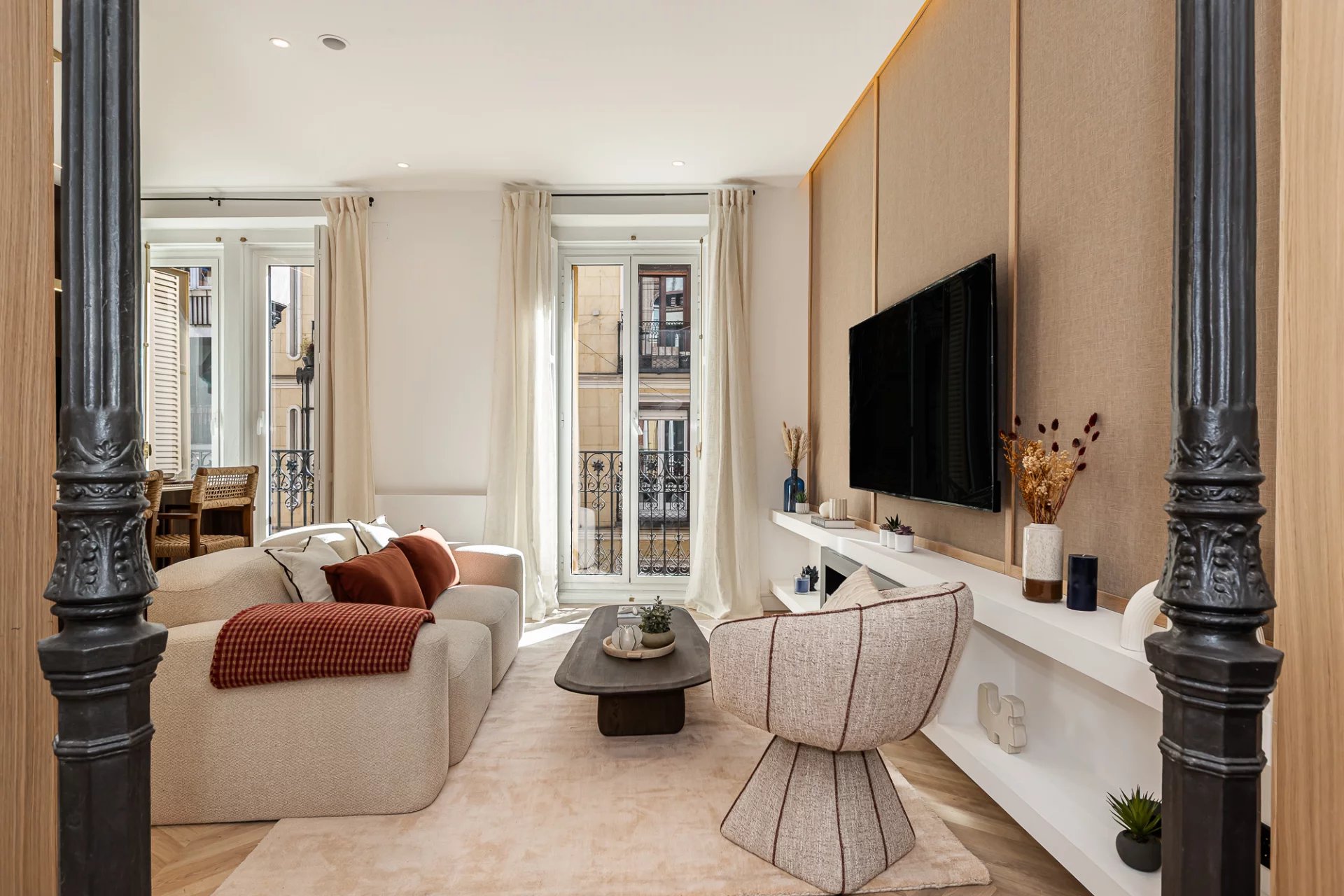
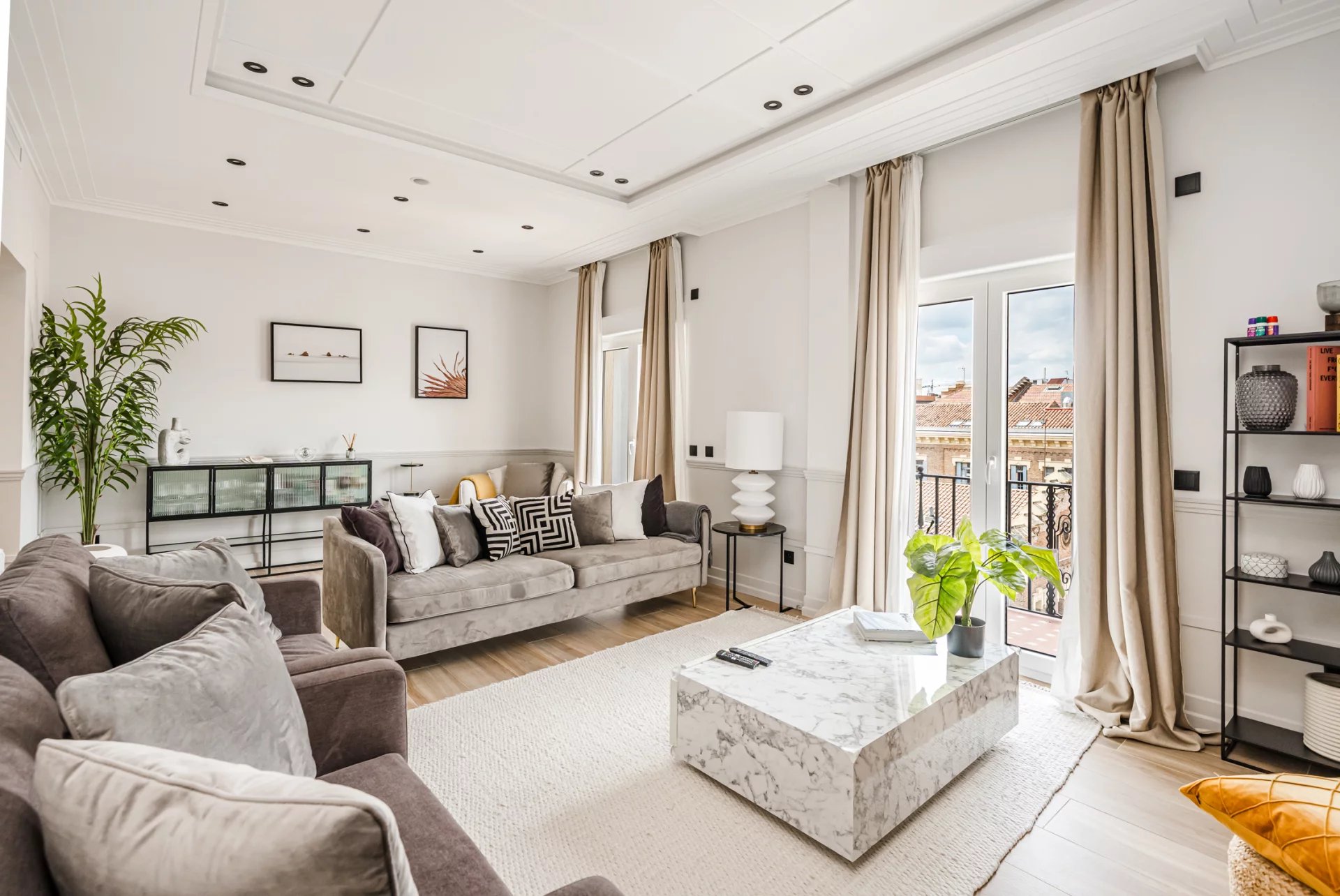
It is not enough simply to transform commercial premises into a legally compliant home. The finished property should be bright, comfortable, quiet, elegant and well integrated into the building.
The quality of the renovation, the interior design and the sense of privacy will be decisive factors in its final value.
Frequently asked questions about changing commercial premises into residential property
Can any commercial premises be converted into a home?
No. Residential use must be permitted under the applicable planning regulations, and the premises must meet technical requirements relating to habitability, safety, ventilation, lighting, accessibility, health and energy efficiency.
Is renovating the premises enough?
No. The physical renovation alone is not sufficient. The change of use must be formally processed and the property’s legal status must be regularized.
Is an architect required?
Yes. A technical project prepared by a qualified professional is normally required, particularly where there is a change of use and adaptation works.
Can the owners’ association prevent the conversion?
It depends on the circumstances. If the bylaws prohibit the change or the works affect common elements, authorization may be required.
It is advisable to review the owners’ association documentation before purchasing.
Can a property created through a change of use be mortgaged?
Yes, although financing may be easier once the change of use has been completed, the final documentation obtained and the property registered as residential with the Land Registry and Cadastre.
How long does the process take?
It depends on the municipality, the type of permit required, the technical complexity and the works.
The process can range from several months to more than a year in complex projects or where heritage protection is involved.
Conclusion
The change of use from commercial premises to residential property in Madrid can represent an attractive opportunity, but it is also a technically, legally and administratively complex process.
Any potential saving on the initial purchase price should be assessed alongside planning feasibility, habitability requirements, construction costs, permits, the owners’ association, financing and final registration.
Before purchasing, the most important step is to confirm that the premises can legally be converted into residential property.
The next steps are to design a realistic project, obtain the correct authorizations and carry out a high-quality renovation.
Discover exclusive properties in Madrid
How BARNES Madrid can assist you
At BARNES Madrid, we assist you with the purchase, sale and analysis of real estate assets from a long-term wealth perspective.
If you are considering acquiring commercial premises to convert into residential property, we assess the location, applicable regulations, feasibility, owners’ association, documentation, estimated costs, future liquidity and potential for appreciation.
We also assist you in finding luxury properties in Madrid, renovated homes, investment assets and selected on & off-market opportunities in prime areas such as Salamanca, Chamberí, Justicia, Retiro, Chamartín, Jerónimos and Las Cortes.
Visit us at 15 Velázquez Street, in the heart of the Salamanca district. BARNES Madrid.