

.jpg)
Market Insights
2026-08-14
Buying a Property in a Protected Building in Madrid: What You Need to Know Before Investing
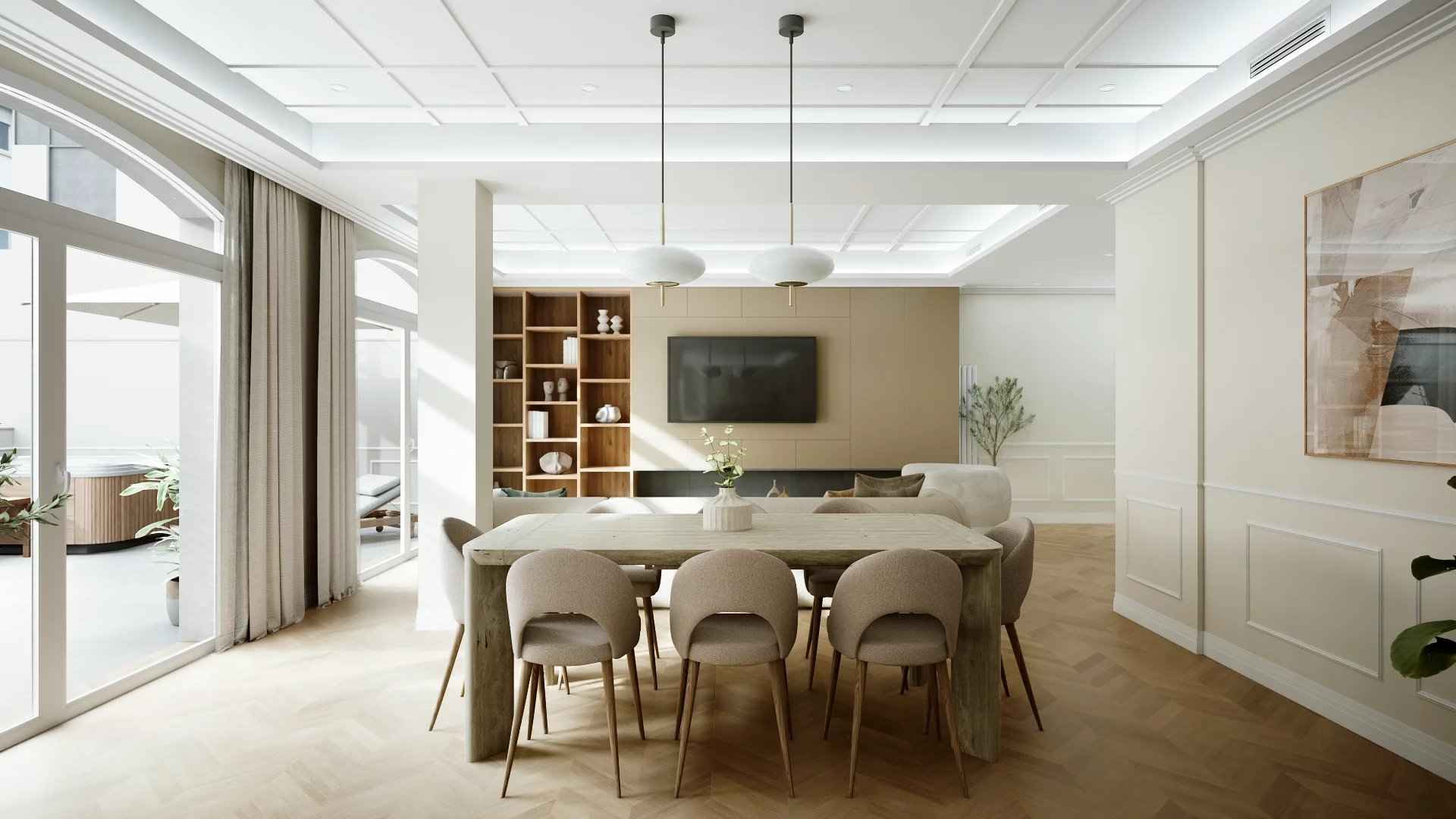
Buying a property in a protected building in Madrid can be an excellent wealth-planning decision. Many of the capital’s most distinctive homes are located in classical buildings with architectural value, historic façades, elegant entrance halls and original features that cannot be replicated in new-build developments.
However, this type of purchase requires more analysis than a conventional transaction. If you are looking to buy an apartment in Madrid in areas such as Salamanca, Chamberí, Justicia, Jerónimos, Retiro, Las Cortes or Centro, it is important to understand what heritage protection involves, how it affects renovation works and which documents should be reviewed before signing.
What is a protected building?
A protected building is a property that has a certain level of protection because of its architectural, historical, artistic, environmental or urban-planning value.
This protection may apply to the entire building or only to specific elements such as the façade, entrance hall, staircase, structure, roof, courtyards, external joinery, mouldings or other distinctive features.
In Madrid, the City Council allows buyers to consult the protection conditions applicable to properties through its Urban Planning Viewer, within the Heritage Protection section, which includes information on urban-planning protection as well as potential heritage protection granted by the Community of Madrid.
For the buyer, this means that before considering a renovation or internal reconfiguration, it is essential to determine exactly which elements are protected and which alterations are permitted.
Why are protected buildings so sought after?
Protected buildings are generally located in some of Madrid’s most established neighbourhoods. Their appeal does not depend solely on location, but also on features that are difficult to reproduce: high ceilings, balconies, bay windows, distinguished façades, period entrance halls, grand staircases and unique architectural proportions.
In the market for luxury apartments in Madrid, these features are highly valued. A renovated apartment in a classical building can offer the perfect balance between historic character and contemporary comfort.
For many international buyers, this combination is precisely what differentiates Madrid from other European capitals.
Protection levels: why they matter
Not all protected buildings are subject to the same restrictions. The level or degree of protection determines what can and cannot be changed.
Some protection measures mainly affect the façade, while others may include interior elements, the structure, the arrangement of openings, staircases or common areas.
Madrid City Council maintains a Catalogue of Protected Buildings containing information such as listed buildings, their level and degree of protection and their catalogue number.
This means that two apparently similar properties may have very different renovation possibilities. Before buying, you should determine whether the protection applies only to the exterior or also to important interior elements.
Renovating a property in a protected building
Renovating a property in a protected building is possible, but the process must be approached carefully. The key is to work with specialised professionals and obtain the licences or authorisations required according to the scope of the project.
In some cases, an internal renovation may be relatively straightforward. In others, altering the layout, creating openings, changing windows, intervening on the façade or modifying common elements may require more demanding procedures.
Madrid City Council itself states that the protection level of the building or premises directly affects the administrative procedure required.
This is particularly important if you are buying a property with the intention of renovating it. It is not enough to imagine the ideal project; you must first confirm that it is feasible.
Which elements are usually protected?
Depending on the building, protected elements may include:
- The main façade.
- Façades facing internal courtyards.
- The entrance hall.
- The staircase.
- Balustrades.
- External joinery.
- Mouldings and decorative features.
- The structure.
- The roof.
- Courtyards.
- The arrangement of openings.
- Other distinctive features of the building.
In a historic building, replacing a window, enclosing a terrace or changing an element visible from the street may require prior approval. A preliminary analysis is therefore essential.
Advantages of buying in a protected building
Buying in a protected building can offer several advantages.
The first is architectural value. These properties have character and individuality, qualities that are particularly appreciated in the prime market.
The second is scarcity. Well-preserved historic buildings cannot be reproduced indefinitely. This limited supply helps protect the value of properties in the best locations.
The third is heritage appeal. A property in a prestigious classical building conveys solidity, history and elegance.
For many buyers of luxury properties in Madrid, the quality of the building itself is an essential part of the purchasing decision.
Risks and limitations
There are also certain risks that should be carefully considered.
The main one concerns restrictions on renovation. If you want a property to be completely reconfigured, with major structural alterations or changes to the façade, you may face limitations.
Maintenance costs can also be higher. In older buildings, the owners’ association may need to carry out conservation works, update installations, improve accessibility or restore the façade.
Administrative timeframes may also be longer if the project requires specific reports or authorisations.
For this reason, the purchase should be assessed from a technical, legal and wealth-management perspective.
Which documents should you review before buying?
Before buying a property in a protected building, it is advisable to review:
- The Land Registry extract.
- The cadastral reference.
- The urban-planning file or information from the Urban Planning Viewer.
- The level or degree of protection.
- The owners’ association statutes.
- Recent meeting minutes.
- The building’s ITE or IEE inspection report.
- Potential special assessments.
- Licences for previous renovation works.
- Available floor plans.
- The legal status of parking spaces, storage rooms or other annexes.
In Madrid real estate transactions, this review helps anticipate costs, timeframes and possible limitations.
ITE, maintenance and the owners’ association
In protected buildings, proper maintenance is particularly important. A building with a historic façade or distinctive common areas must be correctly maintained not only for aesthetic reasons, but also for safety and long-term asset value.
Before signing a deposit agreement, review the condition of the owners’ association. Ask whether any special assessments have been approved or are planned, whether works are pending and whether the building has passed the relevant technical inspection.
An excellent apartment in a poorly maintained building may lose appeal. By contrast, a well-preserved protected building can represent a very solid asset.
Buying to live in: charm and comfort
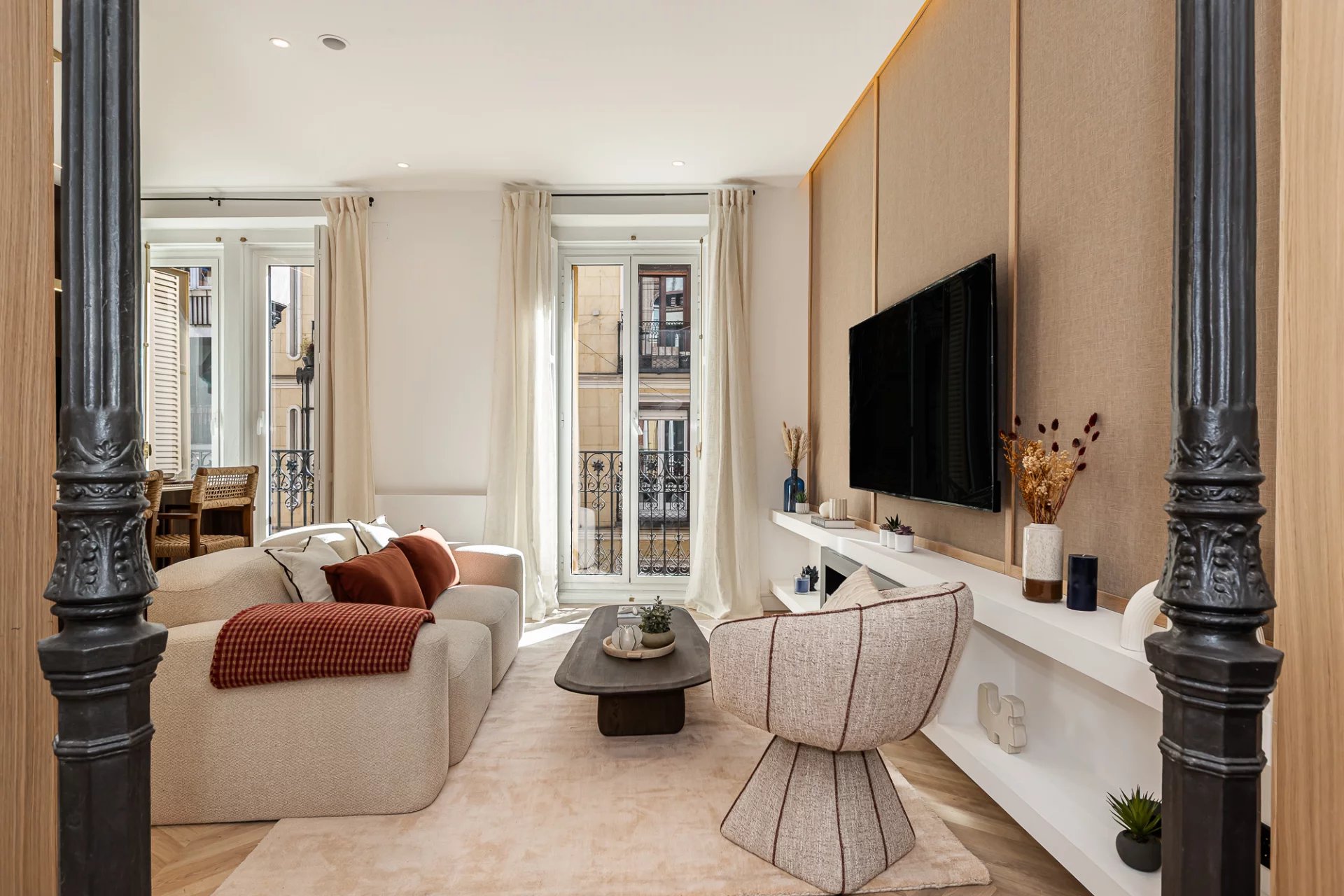
If you are buying to live in the property, a protected building can offer a particularly distinctive residential experience. High ceilings, generous proportions, balconies, wooden floors and original details create an atmosphere that is difficult to find in modern developments.
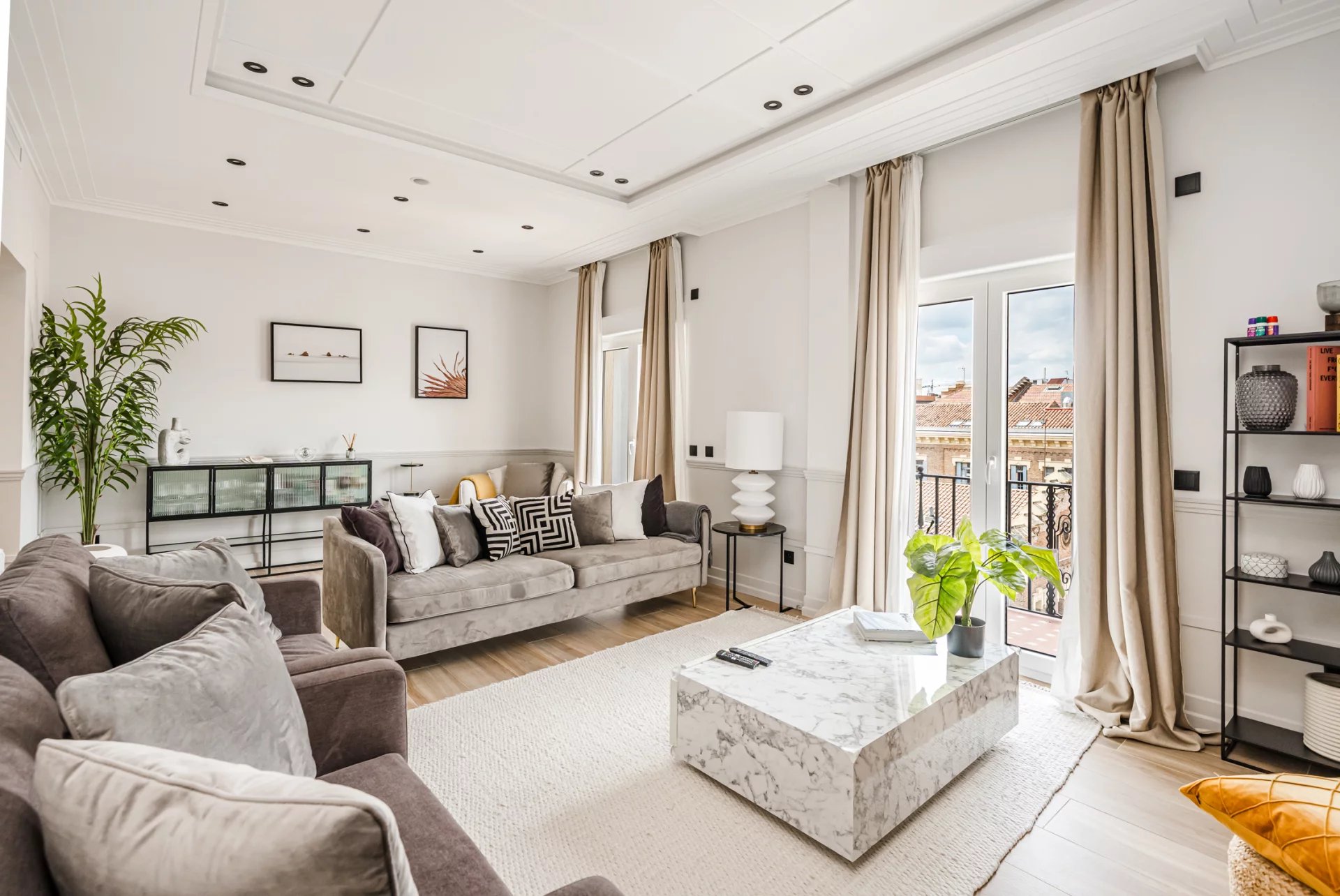
The key is to combine historic charm with modern comfort: sound insulation, efficient climate control, updated installations, a functional layout and contemporary kitchens and bathrooms.
Modern luxury is not only about preserving the past, but about integrating it seamlessly into everyday comfort.
Buying as an investment
As an investment, properties in protected buildings can be highly attractive when they meet four conditions: a prime location, a well-maintained building, a high-quality renovation and clear documentation.
In the rental market, these properties often attract international tenants who value authenticity and character.
On resale, an apartment in a well-positioned classical building may offer stronger liquidity, particularly when it has been fully renovated and is ready to move into.
However, if the property requires a complex renovation, it is advisable to calculate the budget, licensing requirements and timeframes carefully before purchasing.
Best areas in Madrid to find protected buildings
Madrid has many historic properties of particular interest across several prime neighbourhoods.
Salamanca district
In the Salamanca district, areas such as Recoletos, Castellana, Lista and Goya offer prestigious buildings, elegant entrance halls and highly established demand.
Chamberí
In Chamberí, particularly Almagro, Trafalgar and Ríos Rosas, classical buildings are abundant and offer strong residential and heritage appeal.
Justicia and Salesas
In Justicia and Salesas, historic architecture is combined with a cosmopolitan urban lifestyle, galleries, restaurants and boutiques.
Jerónimos and Retiro
In Jerónimos and Retiro, proximity to the park and the cultural axis of Paseo del Prado adds further value.
Las Cortes and Barrio de las Letras
In Las Cortes and Barrio de las Letras, history, culture and centrality make many properties particularly distinctive assets.
What type of buyer is this property suited to?
A property in a protected building may be ideal if you are looking for:
- A home with history.
- A classical and prestigious building.
- A long-term wealth investment.
- A property with character in a prime area.
- A rare asset that is difficult to replicate.
It may be less suitable if you require maximum freedom to renovate, very short timeframes or a property without potential technical constraints.
Advice before signing
Before proceeding, do not focus solely on the beauty of the building. Verify the protection level, review the owners’ association, confirm the relevant licences and make sure the renovation you have in mind is feasible.
It is also advisable to compare the price with similar properties in the same area.
In Madrid, micro-location is crucial: an excellent street, a desirable floor and a high-quality building can justify a price premium.
Conclusion
Buying a property in a protected building in Madrid can be an excellent opportunity for those who value architecture, location and long-term heritage value.
However, this type of purchase requires careful analysis. Protection can add value, but it also involves certain obligations and limitations.
The key is to select properties where history, documentation, building quality and comfort are fully aligned.
Buy your new residence
How BARNES Madrid can assist you
At BARNES Madrid, we assist you in the search for and analysis of properties in protected buildings from a long-term wealth perspective.
We review the location, the building, protection level, renovation potential, documentation, Cadastre, Land Registry, owners’ association and potential for capital appreciation.
If you are looking to buy a luxury apartment in Madrid, invest in a classical building or sell a distinctive property in Salamanca, Chamberí, Justicia, Retiro, Jerónimos, Las Cortes or Centro, our team can assist you throughout the entire process.
Visit us at 15 Velázquez Street, in the heart of the Salamanca district. BARNES Madrid.