

.jpg)
Taxation in Madrid
2026-09-20
What Is Bare Ownership and How Does It Work in Madrid?
.jpg "Bare Ownership: What It Is and How It Works | BARNES Madrid")
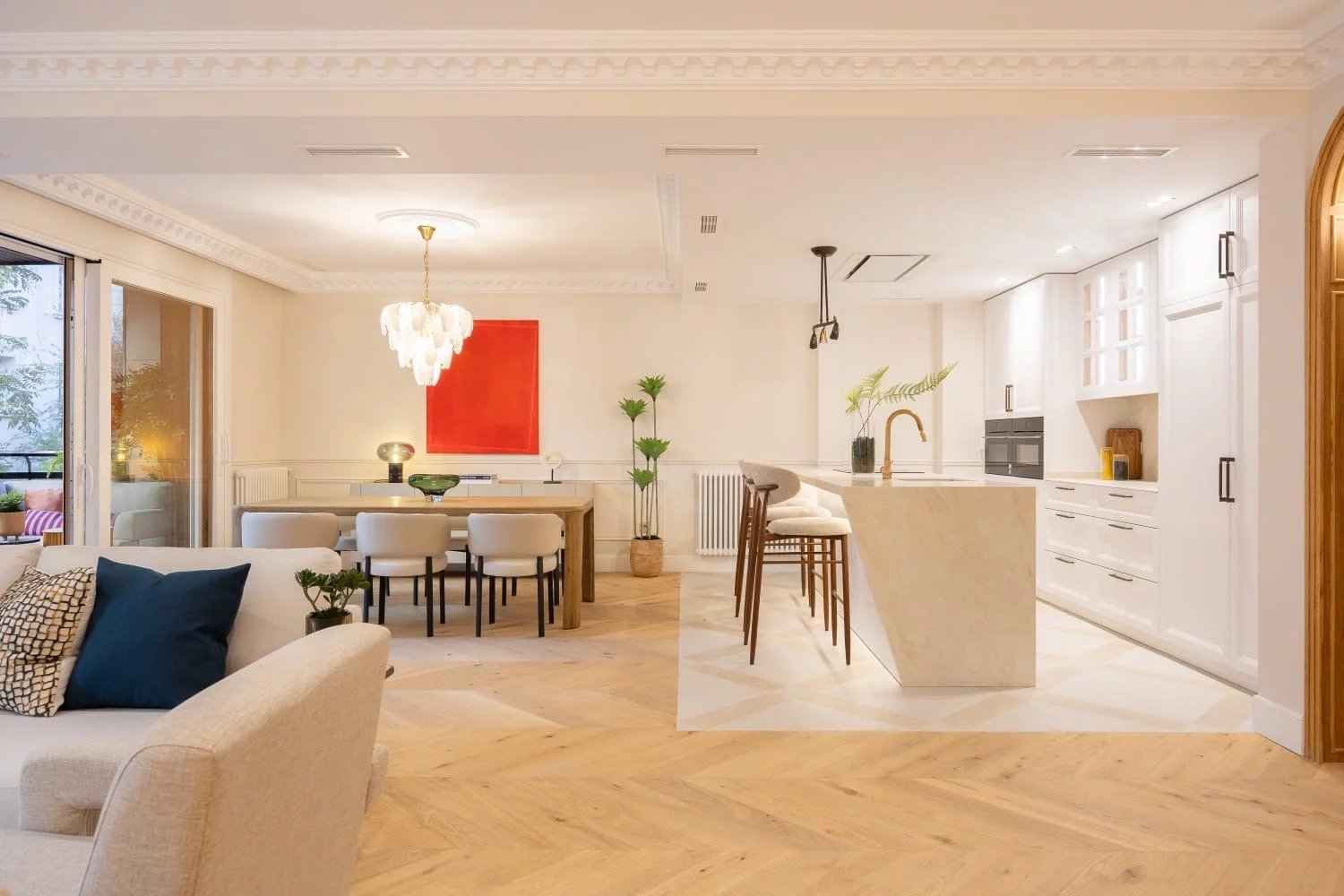
Bare ownership in Madrid: what it is, how it works and what you should know before buying or selling
Bare ownership is a legal structure that is becoming increasingly common in the Spanish real estate market. For many years it was little known outside the legal sector, but today it has become a genuine alternative for owners who want to obtain liquidity without leaving their home, as well as for buyers and investors looking to acquire a property at a discount compared with its full market value.
In Madrid, where prime residential property prices are high and many family-owned properties are located in established areas such as Salamanca, Chamberí, Retiro, Chamartín, Justicia, Jerónimos, Pozuelo, Aravaca and La Moraleja, bare ownership can be an attractive option.
However, it is not a simple transaction. It requires a clear understanding of what is being purchased, which rights the usufructuary retains and when the buyer will be able to obtain full use and control of the property.
What is bare ownership?
Bare ownership is the ownership right over an asset without the right to use or enjoy it.
In other words, the bare owner owns the property but cannot live in it, rent it out or use it while a valid usufruct remains in place.
Bare ownership is a legal concept under which a person owns a property but cannot use it because possession and enjoyment belong to another person: the usufructuary.
While the usufruct remains in force, the bare owner has the right to dispose of the property interest, but not the right to use, enjoy or benefit from the property itself.
Bare ownership and usufruct: two different rights
To understand bare ownership, it is necessary to distinguish it from usufruct.
Full ownership of a property allows the owner to use it, enjoy it, rent it, sell it and otherwise dispose of it. When full ownership is split into two separate rights, these become bare ownership and usufruct.
The bare owner holds legal ownership of the property, but not the right to use it.
The usufructuary has the right to use and enjoy the property, even though they do not hold full ownership.
For example, an older person may sell the bare ownership of their home while retaining a lifetime usufruct. In that case, they receive money from the sale but can continue living in the property for the rest of their life.
The buyer becomes the bare owner and will acquire full ownership once the usufruct comes to an end.
Why bare ownership is used
Bare ownership is mainly used as a way of generating liquidity. It allows an owner to sell their property, receive financial compensation and retain the right to continue living in it.
It is commonly used by older owners who want to access liquidity to cover expenses while ensuring that they can continue using their home, usually for the rest of their life.
This structure can be attractive for owners who wish to improve their quality of life, supplement their income, plan their estate or organize the future transfer of the property.
Ways to sell bare ownership
The sale of bare ownership can be structured in several ways.
The most common option is a single lump-sum payment. The buyer pays an agreed amount to the seller at completion and acquires the bare ownership, while the seller retains the usufruct.
The parties may also agree on a life annuity, under which the seller receives regular payments for the remainder of their life.
Another option combines both structures: part of the purchase price is paid at completion and the remainder is paid through monthly instalments.
The most appropriate structure depends on the age of the usufructuary, the value of the property, the seller’s financial needs, the buyer’s profile and the agreement reached between the parties.
How bare ownership is acquired
Bare ownership may be acquired in several ways.
The first is through a sale. An owner sells the bare ownership of their property and retains the usufruct.
The second is through inheritance. It is common for heirs to receive the bare ownership of a home while the surviving spouse retains the usufruct.
The third is through a gift with retained usufruct. In this case, a person transfers the bare ownership to another person, often a child or relative, while retaining the right to use and enjoy the property during their lifetime.
Rights of the usufructuary
The usufructuary retains the right to use and enjoy the property. They may live in it, use it and, unless otherwise agreed, receive any income or benefits generated by it.
This means that, in certain cases, the usufructuary may rent out the property and receive the rental income for the duration of the usufruct.
The usufructuary may also transfer their usufruct right, although this possibility should be analyzed carefully and must comply with the applicable legal and contractual restrictions.
Their usual obligations include taking care of the property, keeping it in good condition, paying ordinary expenses related to its use and returning it once the usufruct comes to an end.
Rights of the bare owner
The bare owner is the legal owner of the property, but their rights are limited by the usufruct.
They may sell the bare ownership to a third party, provided that the usufructuary’s rights are respected.
They may also mortgage their bare ownership interest, carry out certain improvements that do not prejudice the usufruct and recover full use and enjoyment when the usufruct comes to an end.
Obligations of the bare owner
The bare owner also has obligations. They must respect the rights of the usufructuary and cannot act as though they had full and unrestricted use of the property.
They will also generally bear costs associated with the acquisition, such as notary fees, registration costs and taxes arising from the purchase, unless otherwise agreed or provided by applicable law.
The bare owner may also be responsible for extraordinary repairs or significant structural costs.
In a bare ownership transaction, it is essential to specify in writing who is responsible for each expense: owners’ association fees, IBI property tax, insurance, ordinary repairs, extraordinary repairs, special assessments, maintenance, utilities and taxes.
When does the usufruct end?
A usufruct may end for several reasons. The most common is the death of the usufructuary when a lifetime usufruct has been established.
It may also end upon expiry of an agreed term, waiver by the usufructuary, consolidation of both rights in the same person or fulfilment of an agreed condition.
Once the usufruct ends, the bare owner consolidates full ownership.
At that point, they become the full owner and may use the property, rent it, sell it or otherwise dispose of it freely.
What is bare ownership worth?
Bare ownership is worth less than full ownership because the buyer cannot use or rent the property until the usufruct comes to an end.
The discount will depend on several factors:
- Age of the usufructuary.
- Estimated life expectancy.
- Market value of the property.
- Location.
- State of conservation.
- Associated expenses.
- Liquidity of the asset.
- Terms agreed between the parties.
The younger the usufructuary or the longer the usufruct period, the greater the discount will generally be.
The closer the property is to consolidation of full ownership, the smaller the discount will usually be.
Advantages for the seller
For the seller, bare ownership can offer several advantages.
It allows the owner to obtain liquidity without leaving the property. It may improve personal financial planning, help cover expenses, supplement retirement income or address financial needs without changing residence.
It may also provide emotional security. The seller keeps their home, routines and surroundings while monetizing part of the wealth accumulated in the property over time.
For high-value family homes, particularly in Madrid, this option can be useful for owners who hold significant real estate wealth but have limited liquid assets.
Advantages for the buyer
For the buyer, the main advantage is the ability to acquire a property below the market value of full ownership.
It can be a medium- or long-term investment, particularly when the property is well located, situated in a quality building and within an area with established demand.
In Madrid, bare ownership can be particularly interesting in prime neighborhoods where suitable properties are scarce.
Acquiring the bare ownership of an apartment in Salamanca, Chamberí or Retiro today may provide access to a prime real estate asset at a discount, although without immediate use.
Risks for the buyer
Bare ownership is not suitable for every buyer. Its main disadvantage is the lack of immediate availability.
The buyer cannot live in the property or rent it out while the usufruct remains in place.
They must also assess future expenses, the condition of the property, the expected duration of the usufruct and the possibility of major repairs.
It is also important to consider the liquidity of the investment. Selling bare ownership may be more difficult than selling a property in full ownership because the prospective buyer must accept the restrictions on use.
Risks for the seller
For the seller, the main risk is entering into a transaction without fully understanding its consequences.
Selling bare ownership means giving up full ownership. Although the seller retains the usufruct, they can no longer freely sell the entire property without involving the bare owner.
The seller should also assess the buyer’s solvency if periodic payments have been agreed. In that case, clear guarantees are advisable.
Before signing, the seller should obtain independent legal, tax and notarial advice, particularly if the property is their main residence.
Taxation of bare ownership
The tax treatment of bare ownership depends on the specific transaction: sale, inheritance, gift, retained usufruct, termination of usufruct or consolidation of full ownership.
For Spanish personal income tax purposes, the capital gain generated by the transfer of the bare ownership of a main residence may be exempt where the owner is over 65, has held full ownership for at least three years and retains a lifetime usufruct over the property.
On the other hand, for certain exemptions related to a main residence, bare ownership alone does not provide the right to use and enjoy the home, unlike usufruct, use or habitation rights.
For this reason, every bare ownership transaction should be reviewed on a case-by-case basis with appropriate tax advice.
Bare ownership and reinvestment in a main residence
There is a specific case concerning the exemption for reinvestment in a main residence where a property was originally acquired in full ownership by both spouses and, following the death of one of them, the usufruct and bare ownership become separated.
The reinvestment exemption does not apply automatically. The taxpayer must express their intention to claim it and must comply with the relevant requirements, including those concerning the main-residence status of both the property sold and the property acquired, as well as the applicable reinvestment periods.
This is a technical area and should always be reviewed with a tax adviser before selling or reinvesting.
Bare ownership through inheritance
Bare ownership is very common in inheritance situations. Children may receive the bare ownership of a property while the surviving spouse retains the usufruct.
This arrangement protects the surviving spouse, who may continue using the property, while transferring future ownership to the heirs.
However, it may raise questions regarding expenses, future sale, rental arrangements or the allocation of rights.
It is therefore advisable to document the arrangement clearly and obtain appropriate advice in order to avoid family disputes.
Gift with retained usufruct
A gift with retained usufruct allows a person to transfer the bare ownership during their lifetime while retaining the right to use the property.
It is an estate-planning tool that may be used to organize a family succession, anticipate a future transfer or protect continued use of the property.
However, it has civil and tax consequences that must be reviewed carefully.
In Madrid, it is also advisable to analyze the impact on inheritance and gift tax, municipal capital gains tax, personal income tax and the future consolidation of full ownership.
Buying bare ownership in Madrid: what to check
Before buying bare ownership, you should review:
- The market value of full ownership.
- The valuation of the usufruct.
- The age and circumstances of the usufructuary.
- The condition of the property.
- The building and its ITE or IEE.
- Land Registry charges.
- Mortgages, seizures or other restrictions.
- Ordinary and extraordinary expenses.
- Allocation of taxes.
- The possibility of transferring the bare ownership.
- The exact conditions under which the usufruct will terminate.
You should also confirm that the usufruct is properly registered and that the transaction is formalized before a notary with all necessary safeguards.
Selling bare ownership in Madrid: what to consider
If you are considering selling the bare ownership of your property, the first step is to value the property on a full-ownership basis.
The value of the bare ownership is then calculated according to the terms and characteristics of the usufruct.
You must also decide whether you wish to receive a lump-sum payment, a life annuity or a mixed structure.
This decision should not be based on price alone. Liquidity needs, financial security, age, family circumstances and personal objectives should also be taken into account.
In the luxury market, discretion is particularly important. Many bare ownership transactions involve family wealth and require highly selective marketing.
Bare ownership and the luxury real estate market
In the market for luxury properties in Madrid, bare ownership may arise in connection with high-value assets located in established prime areas.
These may include prestigious apartments in the Salamanca district, family homes in Chamberí, penthouses in Retiro, houses in Pozuelo or distinctive properties in La Moraleja.
For an investor, the attraction lies in accessing a prime location at a discount.
For the owner, the benefit lies in converting real estate wealth into liquidity without leaving the property.
The arrangement can be beneficial for both parties, provided that it is correctly valued, documented and structured.
Difference between bare ownership, reverse mortgage and life annuity
Although these structures may serve similar purposes, they are not the same.
Bare ownership involves selling ownership of the property while retaining the usufruct.
A reverse mortgage allows the owner to obtain financing using the property as security without selling it at that time.
A property life annuity generally links the transfer of a property to the receipt of regular payments.
Each option has different advantages, risks, costs and tax consequences.
The right choice will depend on age, financial needs, heirs, the value of the property and the owner’s wish to continue living in the home.
Frequently asked questions about bare ownership
Can the bare owner live in the property?
No, not while a valid usufruct remains in place. The right of use belongs to the usufructuary.
Can the usufructuary rent out the property?
In general terms, the usufructuary may enjoy the property and receive its income or benefits unless a specific restriction applies.
The terms of the relevant usufruct deed should always be reviewed.
Can bare ownership be sold?
Yes. The bare owner may sell their right, but the buyer must respect the existing usufruct.
When does the bare owner become the full owner?
When the usufruct comes to an end. In the case of a lifetime usufruct, this normally occurs upon the death of the usufructuary.
Is bare ownership a good investment?
It can be if the property is well located, the price is correctly calculated, the documentation is clear and the buyer accepts that they will not have immediate use of the property.
Conclusion
Bare ownership is a useful but complex real estate structure.
It allows the owner to obtain liquidity without leaving their home and gives the buyer the opportunity to acquire an asset at a discount, while accepting that the property cannot be used until the usufruct comes to an end.
In Madrid, it can be particularly attractive for prime properties, where location quality and limited supply help support long-term asset values.
Nevertheless, every transaction should be assessed carefully from a legal, tax, technical and wealth-management perspective.
Discover exclusive properties in Madrid
How BARNES Madrid can assist you
At BARNES Madrid, we assist you with bare ownership transactions, property sales and purchases, inheritances, family wealth and prime real estate investment.
We assess each asset from a comprehensive perspective: location, building, technical condition, taxation, documentation, usufruct, liquidity and potential for appreciation.
If you are considering selling the bare ownership of a property, buying a property in Madrid or investing in luxury properties in Madrid, we provide discreet, personalized advice focused on protecting your wealth.
Visit us at 15 Velázquez Street, in the heart of the Salamanca district. BARNES Madrid.
.jpg)